For Families.

What is BRIDGES-NBS?
BRIDGES-NBS is an optional newborn screening research study using genome sequencing to identify rare conditions in babies.

Routine newborn screening (NBS) screens newborns for at least 30-40 serious, treatable conditions. BRIDGES-NBS screens newborns for about 800 genetic conditions, including many conditions that are not part of routine NBS today.
BRIDGES-NBS only looks for genetic conditions that can affect babies in the first year of life and that have treatments or ways to monitor for early signs (like blood tests, imaging, or regular check-ups). Finding these conditions early could improve a baby’s health.
Curious if your baby is eligible?
Check eligibility, watch short videos about the study, and decide if BRIDGES-NBS is right for your family.
Why families might be interested?
Routine newborn screening (NBS) already checks babies for at least 30-40 serious, treatable conditions.
BRIDGES-NBS builds on this by using genome sequencing to look for about 800 childhood-onset genetic conditions, including many that are not part of routine newborn screening today.
For all conditions in BRIDGES-NBS, early detection can allow for earlier monitoring, treatment, or medical care in the first year of life that may help improve a baby's health. Some of these conditions may develop in the first year of life, while others may start later.
In this study, about 3 to 5 out of every 100 babies (about 3-5%) are expected to have a genetic health risk identified.
Even if a baby’s BRIDGES-NBS result is normal, participating helps researchers and public health programs learn whether genomic screening can improve newborn screening and care for future families.
Click below to learn more about the conditions in BRIDGES-NBS screening.
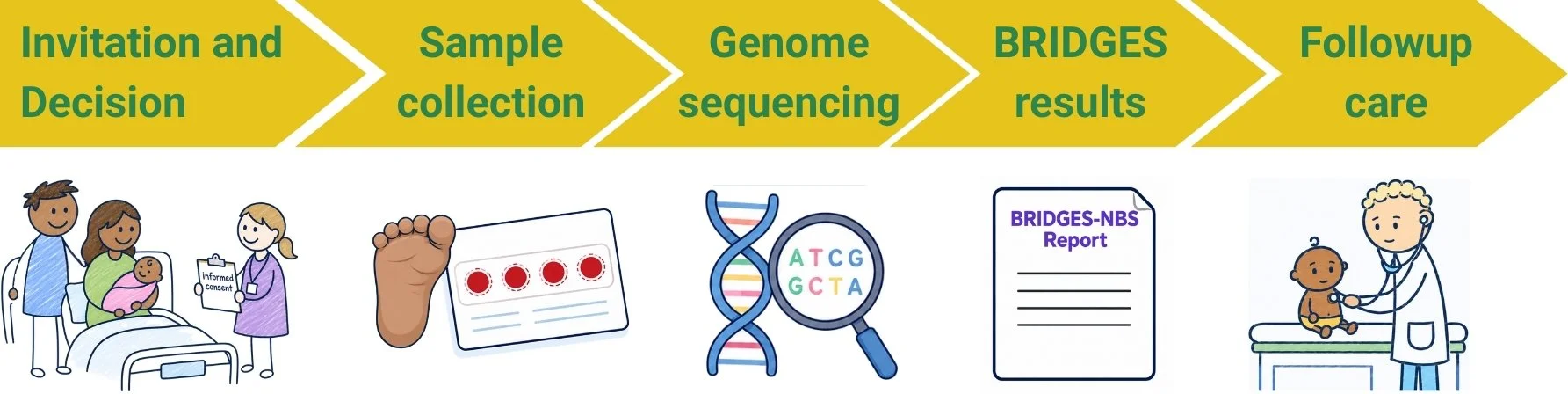
How does BRIDGES-NBS work?
1. Invitation and Decision
Parents or guardians of babies born in states and US territories participating in BRIDGES-NBS will be invited to learn about the study, ask questions, and decide whether they would like their baby to participate. Parents have up to 32 days after their baby is born to decide.
2. Sample collection
As part of routine newborn screening (NBS), all babies have a small heel prick shortly after birth to collect a few drops of blood on a dried blood spot card. If parents or guardians choose to enroll their baby in BRIDGES-NBS, a small amount of the same blood sample will be used for the study.
3. Genome sequencing
A laboratory called GeneDx will perform genome sequencing on the sample to look for genetic changes associated with about 800 conditions included in BRIDGES-NBS.
4. BRIDGES-NBS results
The results will be shared with the baby’s healthcare provider and family.
5. Follow-up care
Results may help guide health and medical care decisions. If a result suggests that a baby may be at risk for a condition, additional testing, monitoring or treatment may be recommended.
How long will it take to get a BRIDGES-NBS result?
Results are expected when babies are about 2-3 months old. Parents will be notified of their baby’s results whether abnormal (positive) or normal (negative).
Is there a cost to be part of the study?
There is no cost to participate and receive genome sequencing through BRIDGES-NBS.
If your baby’s screening result is abnormal (~5% of babies), additional testing, monitoring, or treatment may be needed. These costs are not paid for by the BRIDGES-NBS study.
Costs are usually billed to the baby’s health insurance like any other medical care.
If the baby does not have insurance, or if there are deductibles or co-payments, families may be responsible for these costs.
Who can participate?
Any baby born in a state or territory participating in BRIDGES-NBS may be eligible to participate if they received routine newborn screening in that state or territory. Participating states and territories are:
Iowa, Minnesota, New York, Oregon, Puerto Rico, South Carolina, and Texas
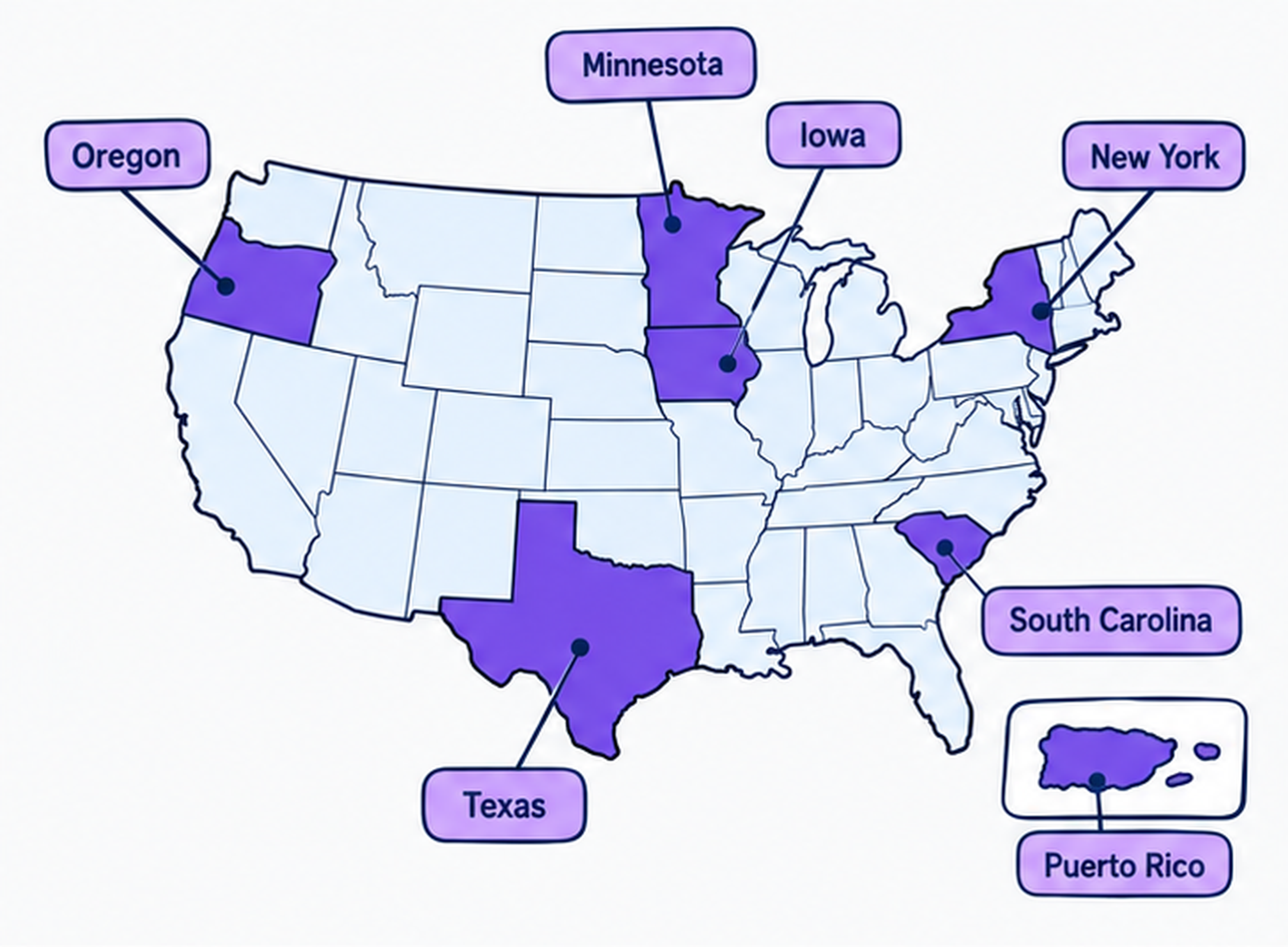
To participate, one of the baby’s parents or a legal guardian must provide consent to enroll the baby in BRIDGES-NBS, and the baby must be 32 days of age or younger at the time of enrollment.
Ready to learn more?
Click below to check your baby's eligibility, watch a few short videos about the study, and decide whether to enroll.
Learn more in three short videos:
Watch three short videos covering what BRIDGES-NBS is, what to think about before joining, and how your baby's data is stored, used, and protected.
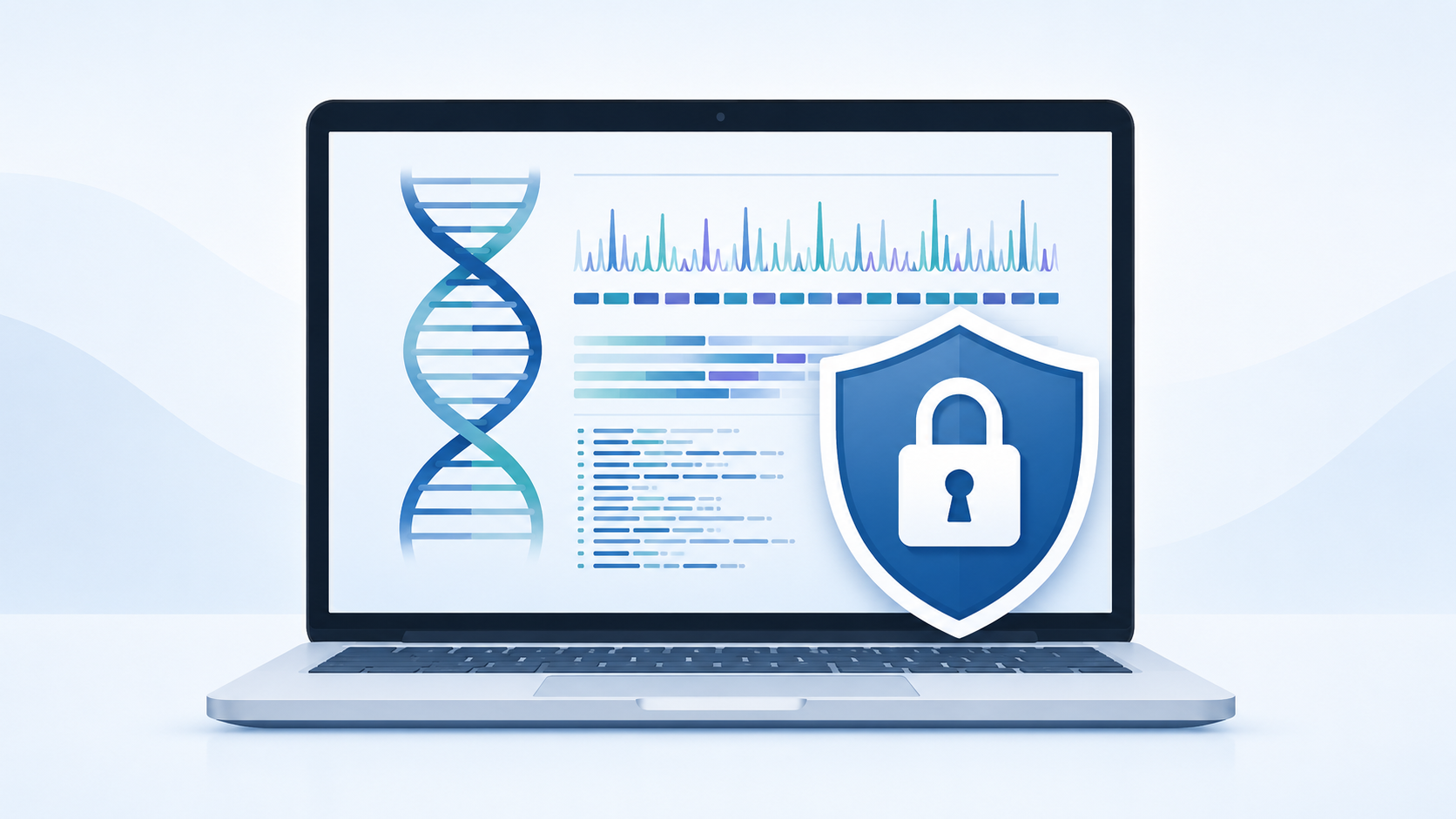
How is a baby’s information protected?
Your baby's genetic information is protected by federal law and will not be shared or sold. Click below to learn more about privacy protections, along with other risks and considerations to think through before enrolling in BRIDGES-NBS.
The BRIDGES-NBS GRC team is available to speak with families about:
An overview of the BRIDGES-NBS project, including the types of genetic results that may be identified
General resources and support related to BRIDGES-NBS results
Questions about genetic discrimination
The GRC is a support team that provides study-related information, helps with next steps, and supports local follow-up. The GRC’s main goal is to be available to a baby’s healthcare team to answer questions they have about the baby’s care.
If families have difficulty finding resources or local care, the GRC can help. While the GRC can share general, condition-based information, it cannot provide individual medical care or medical recommendations to families.
What is the BRIDGES-NBS Genome Resource Center (GRC)?
Common Terms and Definitions in BRIDGES-NBS
-
DNA: The genetic material in your body that carries instructions for how your body grows, develops, and works. Each person has a unique set of DNA, inherited from their parents.
Gene: Genes are made of DNA. Your genes give instructions for how your body functions. They impact basic things like eye color, as well as health and disease risk.
Genome: All of a person’s DNA. It includes all the instructions that tell your body how to grow and work.
Genetic Change (Variant): A difference in your DNA, also called a variant. Everyone has genetic changes. Most do not affect health, but some can increase the chance of certain conditions.
Genetic Condition: When changes in genes (called variants) occur, they can sometimes lead to health conditions also known as genetic conditions.
-
Genome Sequencing: A laboratory test that looks for genetic changes in an individual's DNA that could cause health problems
Screening: A test that checks for a health condition or a risk for a health condition, often before symptoms appear. A screening test does not provide a final diagnosis.
Newborn Screening: A test done shortly after birth to identify babies at risk for treatable health conditions. Most of the testing is done using a small blood sample from the baby’s foot (also called “dried blood spot”).
Abnormal or Positive Result: A result showing a genetic change that increases a person's risk to develop a health condition. It does not always mean the person will develop the condition.
Normal or Negative Result: A result showing no genetic changes were found for the conditions screened for by the study. It does not rule out all possible health conditions.
Risk: An increased chance that a person will develop a certain health problem.
-
Monitoring: Regular medical care to check for early signs of a condition, such as exams, lab tests, imaging, or other evaluations.
Treatment: Medical care used to help prevent, manage, or reduce the symptoms of a health condition. This may include things like medications, special diets, procedures, or other medical care.
Research Study: A project that you and your family can choose to be part of, or not. BRIDGES-NBS is a research study focused on understanding how we could make newborn screening better.
-
De-identified Data: Information that has had personal details (like name or date of birth) removed so it cannot easily be linked back to an individual.
Questions about the BRIDGES-NBS Project?
To learn more about enrolling your baby in BRIDGES-NBS, contact the BRIDGES-NBS team directly at bwhbridges-nbs@mgb.org.
Stay Informed.
If you would like to receive updates about the BRIDGES-NBS project, you can sign up for our newsletter.